
Osteoarthritis Treatment NYC by Marc Bystock L.Ac.
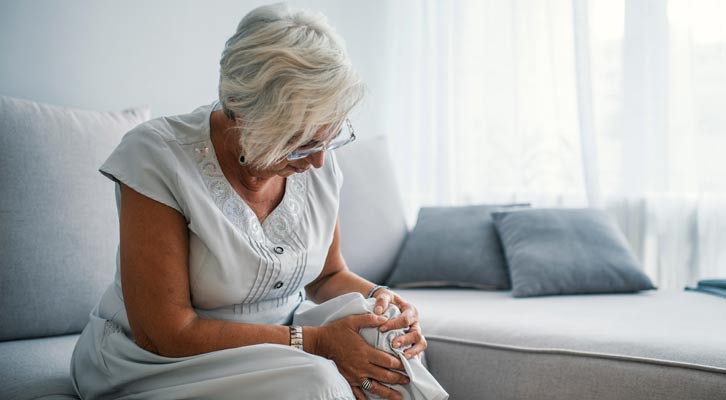
"Acupuncture is an effective treatment for Osteoarthritis. In my experience, I usually prescribe one to two visits weekly until the condition has improved and the pain has subsided. Then, a regular maintenance schedule may be customized for the patient to prevent flare-ups."
-Marc Bystock L.Ac.

Treatments for Osteoarthritis by NYC Acupuncturist in Midtown Manhattan NY 10016
What is Osteoarthritis?
Osteoarthritis is the most common form of arthritis, also known as the wear-and-tear type. It mostly affects adults, both middle-aged and seniors. Over 54 million U.S. citizens have some form of osteoarthritis. Osteoarthritis means inflammation in the joint articulation, joint lining, cartilage, and/or bone. The most commonly affected joints are the knees, hips, spine, hands, and big toes.
Approximately 50% of the general population will have knee osteoarthritis in their lifetime, and 25% will have hip osteoarthritis.
In a healthy state, a thin layer of firm and slippery cartilage cushions the space between bones. As the cartilage wears, bone rubs against bone, causing friction, inflammation, and pain. This is a condition of osteoarthritis. As more tissue is damaged, the immune system mounts a stronger inflammatory response to clear the dead tissue. This process, unfortunately, causes further inflammatory damage that could spread throughout the body. If the joint tissue breaks down faster than the body can repair it, this may lead to permanent joint damage.

What Causes Osteoarthritis?
Not so long ago, osteoarthritis was thought to be caused mainly by excessive wear and tear in the affected areas. While it is still true, excessive wear and tear can cause osteoarthritis, science has expanded the common causes to include:
- Your genetics may have an influence
- Anyone who is obese or overweight may be at risk; excess weight causes too much physical stress, bearing down on the joints
- Any person who repeatedly uses the same joints, such as golfers, tennis players, or painters. A history of joint trauma, even if you had a joint injury years ago, could result in osteoarthritis
- Multiple steroid injections
- The senior population is at higher risk because they have used their joints longer
- Birth defects: Some people are born with malformed bone and cartilage that may lead to osteoarthritis later in life
- Hemochromatosis is a genetic metabolic disorder leading to the uptake and deposition of too much iron into the cartilage and joints, resulting in an arthritic condition
- Nutritional deficiencies such as calcium, magnesium, phosphorus, zinc, protein, iron, silicon, vitamins A, B, D, C, K, fatty acids, potassium, fluoride, and boron
Common Symptoms of Osteoarthritis
Most people first notice an onset of osteoarthritis because of pain, stiffness, or discomfort. All too often, it is when managing the pain and the related symptoms becomes too much to live with that initiates a call to a doctor or health practitioner. Chances are, you will be experiencing one or many of these symptoms:
- Stiffness may occur
- Pain may happen with or without joint movement
- Tenderness and swelling of the joint may occur
- Flexibility may diminish over time
- Crepitus may set in, causing a crackling sound with movement
- Bone spur formation may occur
- Joint full range of motion loss may occur over time
A complete diagnosis can be made by palpation of the swollen joints, X-ray, Magnetic Resonance Imaging (MRI), and blood tests.
How Conventional Medicine Treats Osteoarthritis
The regular course of medical treatment for osteoarthritis includes NSAIDs or non-steroidal anti-inflammatory over-the-counter medications. This classification of drugs provides anti-inflammatory and pain relief. These include aspirin, ibuprofen, and naproxen.
Treatment is palliative. Conventional medicine offers no cures for osteoarthritis. Over time, the condition will only worsen. Therefore, case management is the only reasonable strategy.
It is necessary to keep the affected joint moving. Regular exercises like walking, biking, weightlifting, and swimming are all excellent for strengthening the surrounding joint-supporting tissue and keeping the joint lubricated.
Physical therapy may be prescribed to teach specific exercises and stretches to rebuild the surrounding areas and keep the joint active. As the condition worsens over time, the need for crutches, canes, and walkers may arise as external support mechanisms.
The final stage may be surgery. Joint replacement has become a common practice in hospitals today. It is estimated that by 2029, 3.5 million knee replacement surgeries will be performed annually in the United States alone. Today, approximately 500,000 total hip replacement surgeries are performed annually. These joint replacement surgeries are increasingly being performed on younger patients. These patients have all come to end-stage arthritis.
A recent study indicates that people in their 50s and 60s who expect to keep up and continue exercising may be contributing to the rise in joint disease and joint replacement.
Another possible factor is one less investigated, the rise in Lyme disease. Lyme disease is characterized by the Borrelia bacteria and other coinfections that parasitize joint cartilage for the continuance of their life cycle.
How Can Acupuncture Can Treat Osteoarthritis
Acupuncture is a valuable option for treating osteoarthritis and should be considered. Acupuncture has been used for arthritis for thousands of years. It is part of Traditional Chinese Medicine, which evolved in ancient China. Traditional Chinese Medicine (TCM) consists of acupuncture, Pharmacopeia (Herbology), Tui Na (Massage), and Chinese dietetics (Nutrition). Acupuncture remains one of the most popular “alternative” medical modalities worldwide.
In Chinese medical terminology, acupuncture moves qi (energy) and blood. Both of which may become stagnated or blocked in cases of osteoarthritis, resulting in a bi-syndrome or inflammation and pain.
There is an overwhelming amount of medical research showing that when an acupuncture needle is correctly placed, it triggers a cascade of events. A signal travels from the site of pain, ascending along the spinal column to the brain. This triggers the release of a series of neurotransmitters, including endorphins, enkephalins, and endocannabinoids. These naturally produced opioid-like chemicals reduce and block pain inside the body. In addition, acupuncture boosts cortisol production, which is the body’s own anti-inflammatory.
Acupuncture also improves blood perfusion, increasing oxygen and nutrient delivery to the affected tissue, reducing inflammation, and supporting healing. Acupuncture is an effective therapy and is usually prescribed as one to two visits weekly until the condition has improved. Then a maintenance schedule may be customized for the patient.
In my practice, the typical osteoarthritic patient would take pain-relieving and anti-inflammatory herbs and supplements in addition to acupuncture treatments. A special non-inflammatory diet would be implemented, along with stretching and specific exercises to increase the patient’s joint mobility.
Primarily because osteoarthritis has become so prevalent, I have had extensive experience treating this type of patient. Each case is unique, and patient outcomes may vary. In most cases, patients find pain relief with anti-inflammatory benefits. Best results occur when patients are treated for early-stage symptoms. Later-stage cases can also be helped, as the strategy is usually designed to slow disease progression and break the pain cycle without causing side effects.
Anyone who has had to go through the extensive process of joint replacement surgery also needs acupuncture treatments post-surgery. This helps to lower the pain brought on by surgery. Acupuncture also promotes the healing of surgical scars. If left untreated, scarring will block energy (qi) and blood flow to both local and distal areas.
Understand that just because the arthritic joint tissue has been removed doesn’t mitigate the fact that the underlying reasons for inflammation and tissue destruction may continue, systemically attacking other joints. It is still necessary to lower the painful inflammation process, and acupuncture is excellent at doing just that.

Contact NYC Acupuncturist Marc Bystock L.Ac. for a Free Consultation Regard Osteoarthritis Treatment
I am sometimes surprised by how long a person will simply live with the pain and discomfort of Osteoarthritis, instead of going to an experienced and qualified health practitioner as the first symptoms appear.
Luckily, the human body has amazing powers of restoring itself to a healthy state, and I sincerely believe I can help you accomplish just that. My holistic treatments are custom-designed to address the exact needs of your body, and implement a healing protocol that is as fast as it is effective.
I hope you will contact me for a free consultation so I may review your condition more carefully and advise you on what I believe is the best approach to restoring your body to an arthritis-free life.
Please contact me today!