
Cupping Acupuncture NYC by Marc Bystock L.Ac.

Cupping Acupuncturist in Midtown Manhattan NY 10016
Many forms of alternative medicine have originated in China and reached the West in recent decades. Some catch on as a temporary fad, while others pass quickly into the realms of forgotten knowledge. One recent addition to the Chinese imported medicine portfolio is known as cupping.
The History of Cupping
Cupping is referred to in modern times as an ancient Chinese form of medicine. However, that may not be strictly accurate. The versions of cupping in use today originated in China, but the practice may not have originated there. The earliest known record of cupping is in a medicinal textbook from 3,500 years ago. References to cupping in this text mention it as an Egyptian practice. Throughout the centuries, virtually every culture, including Islam and China, has performed the method.
What is Cupping?
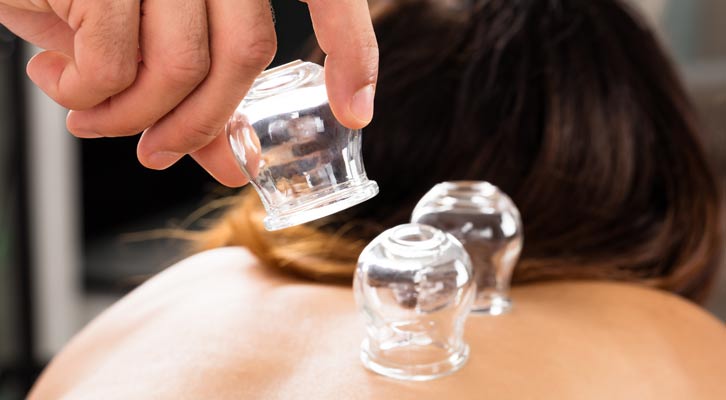
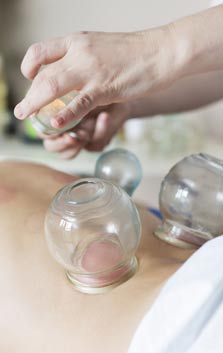
At its most basic, cupping is the application of suction with a cup, typically on the back. In ancient times, individual cups were made from horn, ivory, or bamboo. In modern times, these cups may still be used, but newer glass or silicone cups are often preferred. These cups all have some mechanism for providing suction. Old cups from Finland use a valve mechanism and manual air removal. Modern cups may include small manual pumps. Fire is also used, creating a pocket of hot air that, as it cools, provides suction. This practice is known as fire cupping.
Once the cup is applied and secured via suction, it is left in place for several minutes. The art and science of cupping come from the positioning of the cups. Much like acupuncture, cupping targets specific meridians along the human body to elicit certain effects.
Types of Cupping Acupuncture
- The most basic type of cupping is dry cupping, which involves only cups and suction. Often, the cups have suction mechanisms built in, allowing the physician to apply them without the need for additional aid.
- The second type of cupping is a dry cupping technique called fire cupping. In this variety, fire is used to heat the interior, lowering its inside density. As the air cools, it creates negative pressure, providing suction without the need for valves or pumps.
- The third type of cupping is known as wet cupping. In this process, the cups are applied as usual and left for several minutes. They are then removed, and a small scalpel is used to create superficial incisions in the swollen skin. This ritual bloodletting gives the treatment extra potency in relieving low back pain and other ailments.
Thankfully, as a medical procedure, cupping has very few risks. Dry cupping leaves red marks on the affected skin, but these are rarely painful. Occasionally, strong suction leaves deeper bruises. Again, these are seldom painful, but they tend to last for some time.
Fire cupping for low back pain can, on rare occasions, lead to minor burns. When this is the case, it is likely due to an untrained practitioner being careless with their materials. Cupping on its own is very safe.
Wet cupping carries the risk of minor pain due to the incisions made in the skin. Also, as with any procedure that breaks the skin, there is always a small chance of infection. However, as long as the practitioner properly cares for their equipment, this risk is minimal.

Contact NYC Acupuncturist Marc Bystock L.Ac. for Cupping Treatments
As one of the more recent revivals of ancient Chinese medicine, cupping is becoming an authoritative source of treatment for a variety of ailments. It is a safe, useful, and often relaxing procedure with a significant effect. If you suffer from one of the many ailments that can be reduced or cured with cupping, it is well worth trying. The process is painless and relaxing.
Please contact me for a free consultation.